

Many cancers—particularly those of the liver and lungs—develop in tissues already damaged by chronic conditions such as hepatitis or long-term lung injury. This damage leads to fibrosis, or scarring, which creates an immunosuppressive environment. As a result, immune cells are effectively silenced, allowing tumors to grow without detection. A recent study has demonstrated that targeted nanoparticles can reduce this scarring and restore immune activity in mouse models, opening new pathways for cancer immunotherapy.
What Happened in the Study
Researchers conducted experiments on mice with established tumors in liver or lung tissue, where fibrosis had already developed due to prior chronic disease. The mice were treated with nanoparticles engineered to specifically target and break down scar tissue components, particularly collagen fibers that form the structural backbone of fibrotic areas.
After treatment, the mice showed a significant reduction in fibrotic tissue. This change allowed immune cells—such as T-cells—to re-enter the tumor microenvironment and mount a response. When combined with standard immunotherapy drugs, the mice exhibited improved tumor regression and longer survival compared to untreated controls.
Key Facts from the Research
- The study used nanoparticles designed to bind to specific markers on fibrotic tissue, enabling precise targeting.
- Reduction in collagen deposition was observed within days of treatment, with measurable improvements in immune cell infiltration.
- Combining nanoparticle therapy with existing immunotherapies led to enhanced anti-tumor effects in mice with pre-existing scarring.
- Results were consistent across both liver and lung cancer models, suggesting broad applicability.
- While promising, all results were obtained in mice—human trials are not yet underway.
Background: How the Technology Works
Fibrosis in organs like the liver and lungs is a common consequence of long-term inflammation or injury. This scarring alters the tissue’s structure and function, creating a physical and biochemical barrier that blocks immune cell access. Immune cells, especially cytotoxic T-cells, are unable to reach tumor sites effectively, rendering immunotherapy largely ineffective.
The nanoparticles used in the study are composed of biocompatible materials that can be functionalized with ligands—molecular structures that recognize and bind to proteins overexpressed in fibrotic tissue. Once bound, the nanoparticles deliver a payload that degrades key extracellular matrix components, particularly collagen. This degradation reduces tissue stiffness and opens up space for immune cells to infiltrate.
By disrupting the fibrotic barrier, the nanoparticles do not directly kill tumor cells. Instead, they create a more permissive environment where immune cells can function normally. This is a critical step because many immunotherapies rely on immune cells to recognize and destroy cancer cells. Without access to the tumor, these therapies fail.
Why It Matters
Over 10 million people worldwide suffer from chronic liver or lung diseases that increase their risk of cancer. For these patients, current immunotherapies often fail because the tumor microenvironment is already immunosuppressed. This study suggests a new strategy: not just targeting cancer cells, but addressing the underlying tissue environment that shields them.
By restoring immune access, nanoparticle therapy could make existing immunotherapies more effective for a large subset of patients. This approach may especially benefit individuals with pre-existing conditions such as cirrhosis or chronic obstructive pulmonary disease (COPD), who are at higher risk for cancer development.
Moreover, the success of this approach in mice indicates that fibrosis may not be an insurmountable barrier to treatment. It points to a broader principle: that cancer therapy must consider the tissue context in which tumors arise.
Limitations and Open Questions
While the results are encouraging, several limitations remain. First, the study was conducted entirely in mice, and human physiology and immune responses differ significantly. The translation of these results to human patients is uncertain and will require extensive clinical trials.
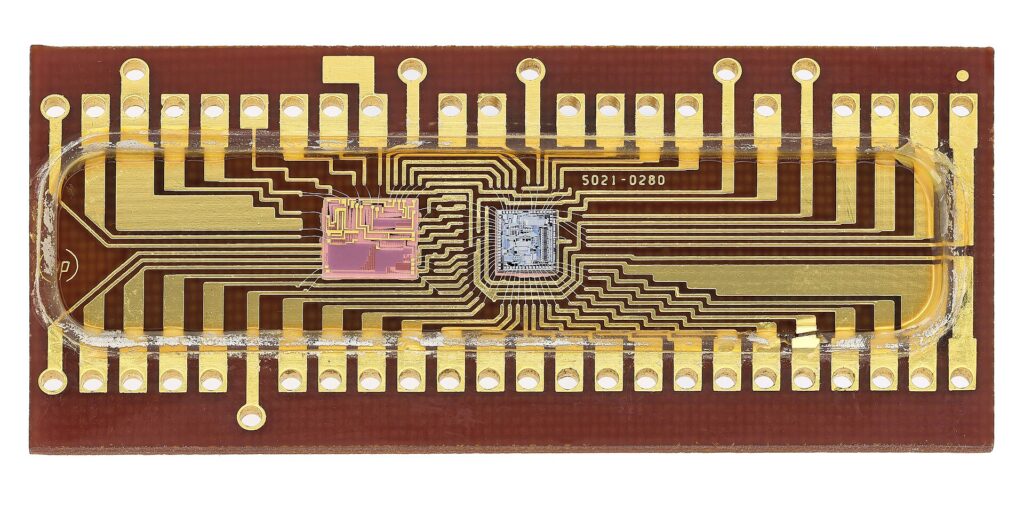
Case opened to reveal the ICs dice.
Manufactured by Hewlett Packard, 1970s. by Mister rf, CC BY-SA 4.0, via Wikimedia Commons. · Source · License
Second, the long-term safety of nanoparticle delivery—especially in organs with chronic damage—is unknown. Potential risks include off-target effects, inflammation, or unintended immune activation.
Third, the exact molecular mechanisms by which the nanoparticles degrade collagen and recruit immune cells need further investigation. The role of specific immune cell subsets and signaling pathways remains unclear.
Finally, it is not yet known whether this approach would work in other types of cancer or in patients with different forms of fibrosis. More research is needed to determine its scope and applicability.
What to Watch Next
Researchers are now planning follow-up studies to test the approach in larger animal models and to refine nanoparticle design for better targeting and reduced side effects. A key next step will be to evaluate whether similar strategies can be applied to other fibrotic diseases, such as kidney or heart disease, where tissue scarring also suppresses immune function.
Additionally, the development of delivery systems that can be combined with existing immunotherapies—such as checkpoint inhibitors—may lead to new combination treatments. This could represent a shift in how we approach cancer therapy: from solely targeting cancer cells to also modifying the surrounding tissue environment.
For those interested in the technical challenges of nanoparticle delivery, a related article explores how freezing affects mRNA stability in nanoparticles, highlighting the importance of preserving potency during storage and transport. Read more here.
Another relevant development is a laser-based blood test that detects colorectal cancer biomarkers in minutes—demonstrating how diagnostics and therapeutics are advancing in parallel. Learn more.
Meanwhile, research into silver nanoparticles improving carbon dioxide conversion shows how nanomaterials can be used in environmental applications—underscoring the versatility of nanotechnology across fields. See that work.
All information in this article is based on the original source: https://phys.org/news/2026-09-nanoparticles-tumor-scarring-enable-immunotherapy.html.
Sources & further reading
Featured image: Linked Open Data presentation for BYTE by Alan Ang (WMDE), CC BY-SA 4.0, via Wikimedia Commons. Image source · License