
Higgsfield AI has released a new video creation feature powered by GPT-6 Astra, allowing small businesses to generate video advertisements with minimal input. According to a post on OpenAI’s website, the update enables users to move from prompt to production in a single day, significantly reducing the time and technical expertise required to create marketing content.
What Happened
On a recent update, Higgsfield AI introduced GPT-6 Astra, a next-generation artificial intelligence model specifically designed to accelerate the creation of video advertisements. This development marks a significant step in democratizing access to high-quality video content, traditionally reserved for large marketing agencies with substantial budgets and in-house creative teams.
The feature leverages advanced natural language processing and computer vision capabilities to interpret user prompts—such as ‘a friendly local bakery selling sourdough bread in a sunny morning setting’—and generate tailored video scripts, scene descriptions, and even render video clips based on those inputs. Users can input a brief description of their product, target audience, and desired tone, and within hours, the system produces a fully editable video ad that can be customized further.
How GPT-6 Astra Works
GPT-6 Astra operates at the intersection of natural language understanding and video generation. Unlike earlier AI tools that only generate text or static images, this model is trained on vast datasets of real-world video content, enabling it to understand visual context, transitions, lighting, and motion. It can identify key elements such as product placement, background settings, and emotional tone, and then suggest realistic sequences that align with brand messaging.
Behind the scenes, the system uses a combination of diffusion models and transformer-based architectures to generate video frames in sequence. Each frame is constructed based on the prompt and contextual cues, ensuring consistency in style, pacing, and narrative flow. The AI also learns from user feedback loops, allowing it to refine outputs over time and adapt to specific business needs.
One of the key innovations of GPT-6 Astra is its ability to handle complex narrative structures. For instance, a small e-commerce business could describe a story arc—such as a customer discovering a product through a personalized recommendation—and the AI would generate a video that unfolds in a logical, engaging sequence, complete with character expressions, scene transitions, and voiceover suggestions.
Benefits for Small Businesses
Small businesses often face significant barriers to entry when it comes to digital marketing. Traditional video production requires hiring videographers, editors, and designers, which can cost thousands of dollars and take weeks to complete. GPT-6 Astra eliminates these bottlenecks by enabling entrepreneurs to produce professional-quality video ads using only a smartphone and an internet connection.
With GPT-6 Astra, a local coffee shop owner can describe their brand values—such as ‘community, warmth, and quality’—and generate a video ad that showcases their shop in action, with customers enjoying drinks in a cozy, inviting environment. This not only saves time and money but also allows businesses to experiment with different messaging strategies without the risk of costly trial-and-error.
Moreover, the tool supports rapid iteration. If a business is not satisfied with the initial output, users can revise their prompt and receive updated versions in real time. This iterative capability is critical for refining messaging and ensuring alignment with audience expectations.
Limitations and Open Questions
Despite its impressive capabilities, GPT-6 Astra is not without limitations. One major concern is the quality and authenticity of generated content. While the AI can produce visually coherent videos, the realism of facial expressions, gestures, and environmental details may still fall short of human-created content, especially in emotionally nuanced scenes.
Additionally, there are ethical and legal considerations. For example, if the AI generates content that includes real people or locations, there may be issues related to consent, privacy, or intellectual property. Businesses must ensure that any generated content does not infringe on existing rights or misrepresent individuals or brands.
Another open question is the long-term impact of AI-generated content on human creativity. While automation improves efficiency, it may reduce opportunities for human artists to contribute meaningfully to the creative process. There is ongoing debate about how to balance AI-assisted tools with human oversight and artistic judgment.
Industry Implications and Future Outlook
The launch of GPT-6 Astra signals a broader trend in the marketing technology space: the increasing integration of AI into content creation workflows. As more businesses adopt such tools, we may see a shift in how digital campaigns are planned and executed, with AI handling the bulk of content generation while human professionals focus on strategy, audience targeting, and performance analysis.
Looking ahead, Higgsfield AI may expand GPT-6 Astra’s functionality to include features such as audience analytics, performance prediction, and A/B testing suggestions. These enhancements would allow small businesses to not only create videos but also optimize them for engagement and conversion.
Additionally, the tool could be integrated with existing marketing platforms—such as social media scheduling tools or e-commerce dashboards—creating a seamless workflow from idea to distribution. This would further reduce friction in the marketing funnel and empower businesses to respond quickly to market trends.
As AI continues to evolve, tools like GPT-6 Astra will likely become standard components of digital marketing strategies. However, their success will depend on how well they are balanced with human creativity, ethical standards, and user trust.
For now, GPT-6 Astra represents a powerful milestone in making video advertising accessible to a wider range of businesses. It demonstrates that AI can not only automate tasks but also elevate the quality and reach of marketing content—without requiring specialized skills or extensive resources.
Related reading
- Cooley’s GO Public Uses AI to Streamline IPO Process
- OpenAI Launches Australian Youth Safety Blueprint for AI
Sources & further reading
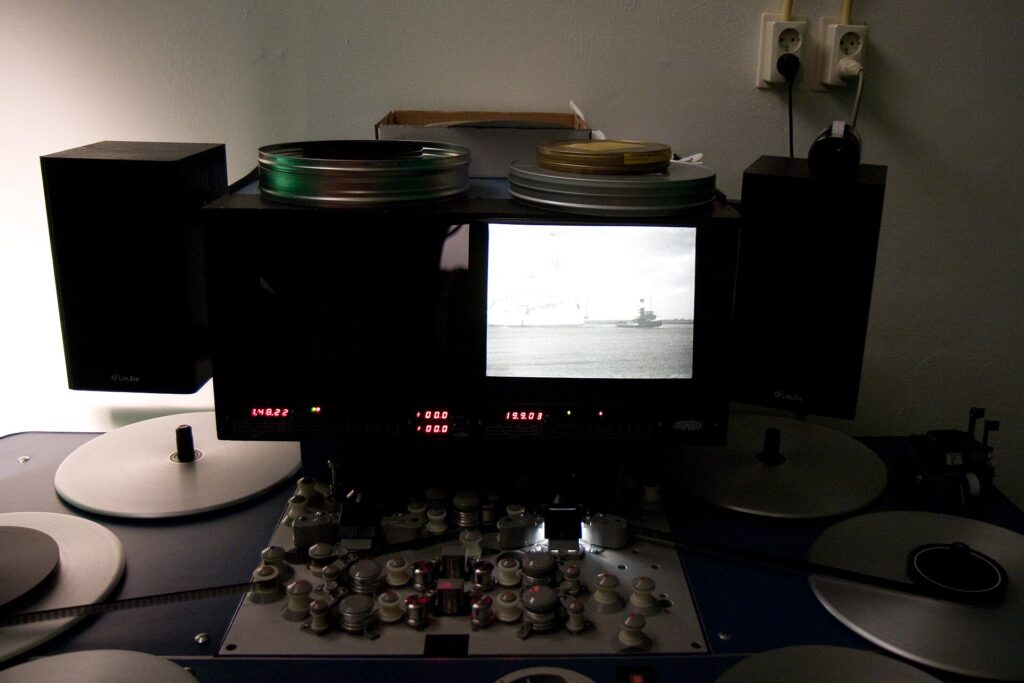
Featured image: Film editing workstation by Marcel Oosterwijk, CC BY-SA 2.0, via Wikimedia Commons. Image source · License
Leave a Reply